
Mini-Open Surgery


Mini-Open Surgery
In some patients when the condition of the joint is not suitable for key-hole surgery, a small opening is made into the joint just like traditional orthopedic surgery and the repair is done.
Mini-Open Rotator Cuff Repair
Mini-open rotator cuff surgery involves smaller incisions than open surgery. In this procedure, the surgeon does not detach the large deltoid muscle which results in less risk and recovery time. Most patients see improved shoulder function followed by the increased strength and range of motion.
Mini-open rotator cuff surgery offers newer technology to perform a repair through a small incision (typically between 3 and 5 cm long). It also uses arthroscopy to assess the damage to other structures within the shoulder joint.
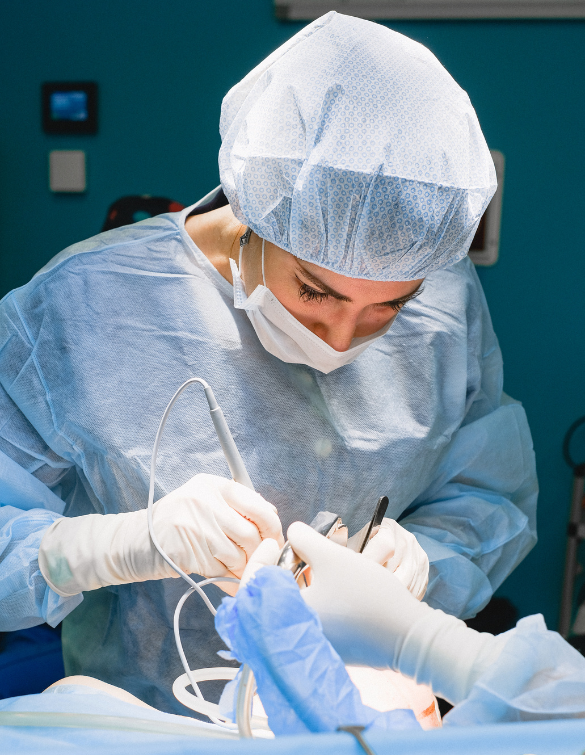
Benefits of Mini-Open Surgery:
Mini-open surgery offers several advantages over traditional open surgery and pure arthroscopic procedures:
-
Smaller Incisions, Less Trauma
The incision is significantly smaller than in open surgery, resulting in reduced soft tissue damage.
-
Improved Visualization
Surgeons get better direct visibility than with arthroscopy alone, improving the accuracy of complex repairs.
-
Reduced Pain & Swelling
Minimal cutting means less inflammation post-surgery, leading to quicker pain relief.
What Happens During the Procedure?
Mini Open Rotator cuff repair may be done on an outpatient basis or as part of your hospital stay. In this procedure, your surgeon makes a short incision about 3 cm to get direct access to the torn rotator cuff tendon. He uses the arthroscope to look into the shoulder joint to clean out any damaged tissue or bone spurs.
Preparation for the rotator cuff repair will be made arthroscopically. Once the arthroscopic portion is completed, a shorter incision will be made to repair the tendon back to the bone. The recovery may be less painful following the mini-open rotator repair than the open cuff repair.
Frequently Asked Questions
To help you better understand your condition and treatment options, we’ve answered some of the most commonly asked questions below.
Mini-open surgery uses a small incision to allow direct access for the surgeon, offering more control than arthroscopy and less tissue damage than traditional open surgery.
Pain is typically less than with open surgery due to the smaller incision. Most patients receive pain relief with medications and nerve blocks.
Recovery depends on the condition treated, but most patients experience faster healing than with full open procedures. Active rehab usually starts within a week.
No. The incision is small and often hidden along natural skin lines, leaving minimal scarring.